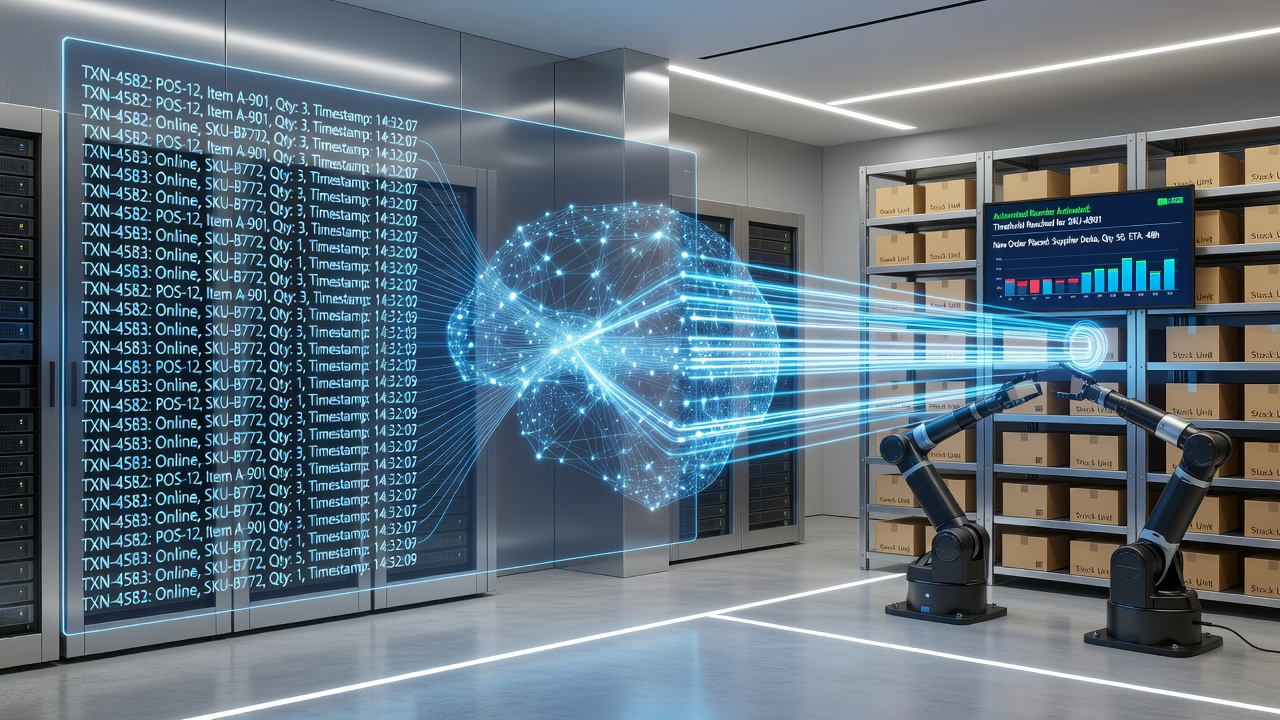
How Electronic Transaction Logs Connect to Automated Stock Replenishment in Integrated Sales Environments
Electronic transaction logs capture every sale at the point of interaction, and these records feed directly into inventory algorithms that trigger stock orders without manual intervention. Retail systems record item identifiers, quantities, timestamps, adn payment details at each terminal, then route that data through middleware layers to central databases where replenishment rules evaluate current stock levels against projected demand.
Data Capture at the Point of Sale
Integrated sales environments rely on point-of-sale terminals that generate structured logs for every transaction, and these logs include universal product codes along with timestamps that mark when each item leaves inventory. Systems timestamp each entry to the millisecond, which allows downstream applications to correlate sales velocity with time-of-day patterns or promotional events. The logs also store location codes that distinguish between physical stores and online channels, so replenishment engines can allocate incoming stock to the correct distribution points.
Once captured, the data moves through application programming interfaces that standardize formats across different hardware vendors. This standardization lets warehouse management platforms read the same fields regardless of whether the original transaction occurred at a countertop reader or a mobile checkout device. Observers note that batch processing often occurs every few minutes during peak hours, while real-time streaming handles high-velocity periods such as holiday rushes.
Integration Pathways Between Logs and Inventory Systems
Transaction logs reach automated replenishment engines through middleware that filters and aggregates entries before they enter enterprise resource planning platforms. The middleware applies rules that group similar items, calculate sell-through rates, and compare those rates against preset reorder thresholds. When a threshold is crossed, the system generates a purchase order that routes to suppliers or internal distribution centers.
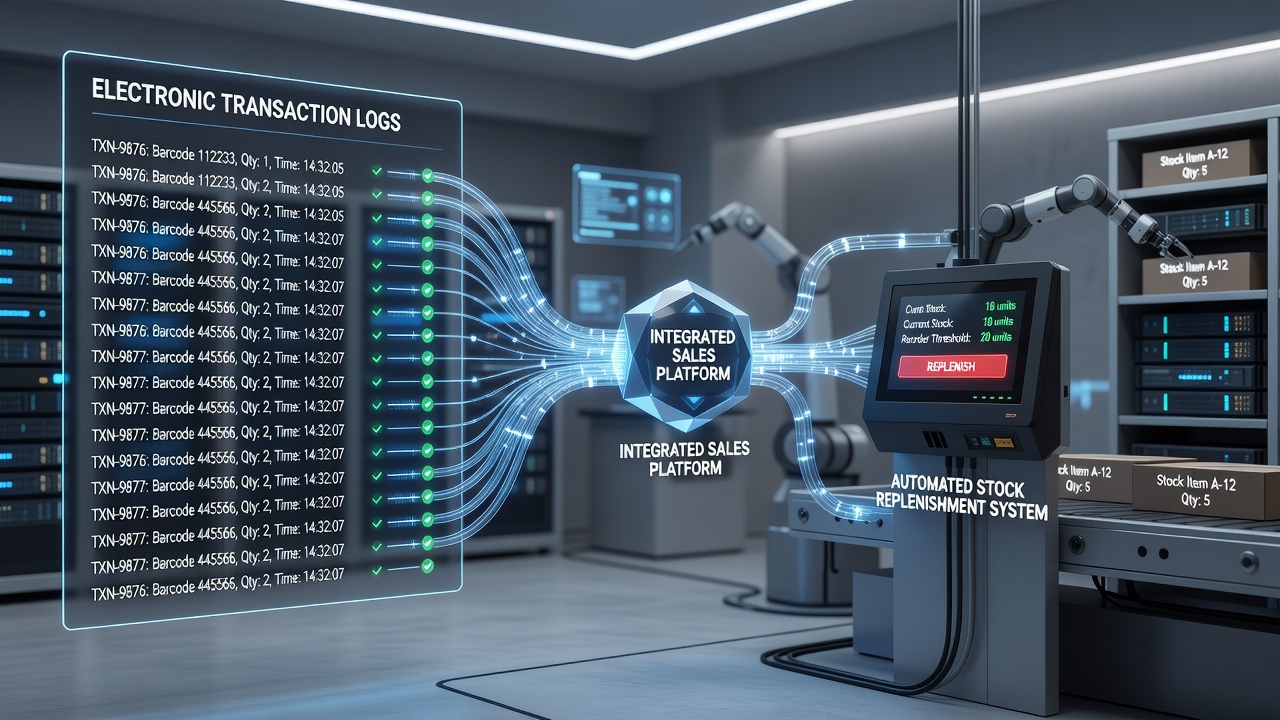
Researchers at the University of Melbourne documented how Australian retailers reduced stockouts by 18 percent after linking transaction streams directly to warehouse robotics in 2025. Their findings showed that the elimination of manual data entry steps shortened the interval between sale and reorder signal from hours to under three minutes. Similar architectures appear in European retail chains where Eurostat supply-chain reports track comparable efficiency gains across multiple member states.
Algorithmic Triggers and Reorder Logic
Automated replenishment depends on algorithms that interpret transaction volume, velocity, and seasonality from the logs. These algorithms assign weights to recent sales data while discounting older entries, and they incorporate external variables such as weather forecasts or local events when those data streams are available. Safety-stock calculations adjust dynamically based on lead-time variability recorded in supplier performance logs.
One study revealed that retailers using multi-channel transaction aggregation cut excess inventory carrying costs by aligning replenishment more closely with actual demand signals. The same study found that systems ignoring channel-specific patterns tended to overstock slow-moving items while understocking fast movers. Integration therefore requires careful mapping of every sales channel to a unified inventory view.
Real-Time Adjustments During High-Volume Periods
During flash sales or promotional windows, transaction log volume spikes dramatically, and replenishment systems must scale their processing capacity accordingly. Cloud-based platforms handle this scaling by spinning up additional compute nodes that parse incoming streams in parallel. The result is that stock levels update across stores and fulfillment centers within minutes rather than at the end of a shift.
Those who manage large retail networks report that the ability to adjust reorder points on the fly prevents both empty shelves and overfilled backrooms. Data from the U.S. Census Bureau on retail sales patterns shows that integrated environments maintain tighter alignment between recorded transactions and physical inventory counts throughout the calendar year.
Conclusion
Electronic transaction logs serve as the primary data source that drives automated stock replenishment decisions in integrated sales environments. The connection depends on standardized capture at terminals, reliable transmission through middleware, and responsive algorithms that translate sales activity into supplier orders. As networks continue to link physical and digital channels, the precision of these log-to-replenishment pathways determines how closely available stock matches customer demand across all locations.