Inside Acquiring Banks' Clearing Rhythms and Their Pull on E-Commerce Inventory Triggers

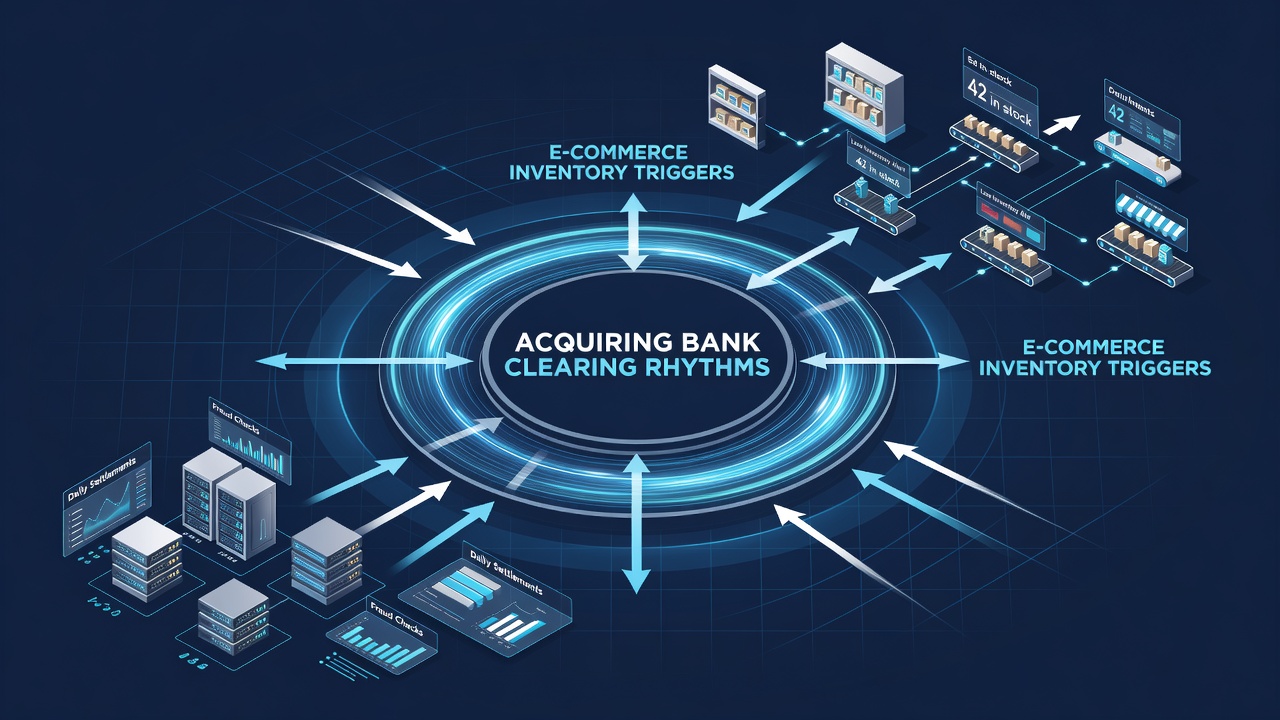
Acquiring banks handle merchant transactions through structured clearing cycles that determine when funds move from card networks to merchant accounts, and these patterns directly shape how e-commerce platforms adjust stock levels and reorder points. Systems often wait for settlement confirmation before updating inventory records, creating a lag between authorization and actual availability signals that warehouses rely on for replenishment decisions.
Core Mechanics of Bank Clearing Cycles
Acquiring institutions collect daily batches from merchants, typically closing windows at midnight local time before forwarding details to card networks for interchange and settlement. Funds usually reach merchant accounts within one to three business days, depending on the bank's risk parameters and the card brand involved. Observers note that these rhythms remain consistent across regions even as transaction volumes fluctuate seasonally.
Data from payment processors shows that batch files submitted before cutoff times clear faster than those queued after hours, which shifts to the next processing window. This timing affects e-commerce dashboards that tie confirmed receipts to automatic inventory decrements. Retail platforms using real-time authorization for sales often maintain separate ledgers for pending settlements, yet warehouse triggers activate only after the acquiring bank reports cleared status.
How Settlement Timing Influences Stock Reorders
E-commerce inventory engines monitor transaction streams and compare authorized amounts against settled figures before generating purchase orders to suppliers. When clearing extends beyond 48 hours, as occurs with certain international card transactions, platforms delay reorder signals to avoid overstocking based on unconfirmed revenue. Research from the Bank of Canada indicates settlement delays average 1.8 days for cross-border e-commerce flows processed through Canadian acquirers.
One logistics coordinator at a mid-sized apparel retailer described how weekend batches submitted on Friday often clear the following Tuesday, forcing manual overrides during peak periods like holiday rushes. Automated systems now incorporate buffer rules that estimate clearance probabilities based on historical acquirer performance, allowing earlier but conditional inventory adjustments. These rules draw from patterns tracked across Visa and Mastercard networks, where batch reconciliation occurs in distinct phases separated by risk scoring and fraud checks.
Regional Variations in Clearing Practices
European acquirers operating under SEPA guidelines often align batches with TARGET2 operating hours, which run from 7 a.m. to 6 p.m. CET on business days. This structure produces predictable clearance windows that e-commerce operators in the EU integrate into their supply chain software. In contrast, Australian banks follow similar daily cycles yet accommodate weekend processing for high-volume merchants, shortening average settlement times during promotional events.
According to figures released by the European Central Bank, the average value of delayed settlements in online retail reached 12 percent of total volume in early 2026. Merchants adjust inventory forecasting models accordingly, incorporating these regional differences when expanding across markets. Systems that sync directly with acquirer APIs receive settlement notifications within minutes of completion, enabling precise trigger points for warehouse automation.
Integration Challenges and Technical Adjustments
Legacy inventory platforms frequently require middleware to interpret clearing reports from multiple acquiring banks, each with distinct file formats and reporting intervals. Developers map settlement codes to inventory actions such as reducing available stock or initiating supplier orders. In June 2026 several major processors introduced standardized JSON feeds that reduced mapping errors by 40 percent compared with older batch file methods.
Retail chains handling flash sales monitor authorization spikes separately from settlement confirmations, since cleared funds determine the final inventory recalculation. When batches contain chargebacks or disputes, systems reverse prior triggers to prevent premature restocking. Payment networks publish daily reconciliation reports that feed these reversal processes, maintaining alignment between financial records and physical stock counts.
Future Developments in Synchronized Processing
Acquiring banks continue to test faster settlement rails that could compress clearing rhythms to same-day windows for domestic transactions. Pilot programs in the United States examine integration with real-time payment systems, which would allow e-commerce platforms to trigger inventory updates almost immediately after authorization. Such changes depend on regulatory approvals and network upgrades scheduled for rollout through late 2026.
Merchants already using advanced reconciliation tools report fewer discrepancies between sales data and warehouse activity when they align batch schedules with acquirer cutoffs. These alignments reduce the need for manual intervention during high-volume periods and support more accurate demand forecasting across channels.
Conclusion
Acquiring bank clearing rhythms establish the cadence at which e-commerce systems validate revenue and activate inventory controls, creating measurable effects on reorder timing and stock accuracy. As settlement processes evolve through new technology and regional standards, platforms adapt their triggers to maintain synchronization between financial confirmation and supply chain actions. Data from multiple central banks and processors confirms these connections remain central to efficient hybrid retail operations.