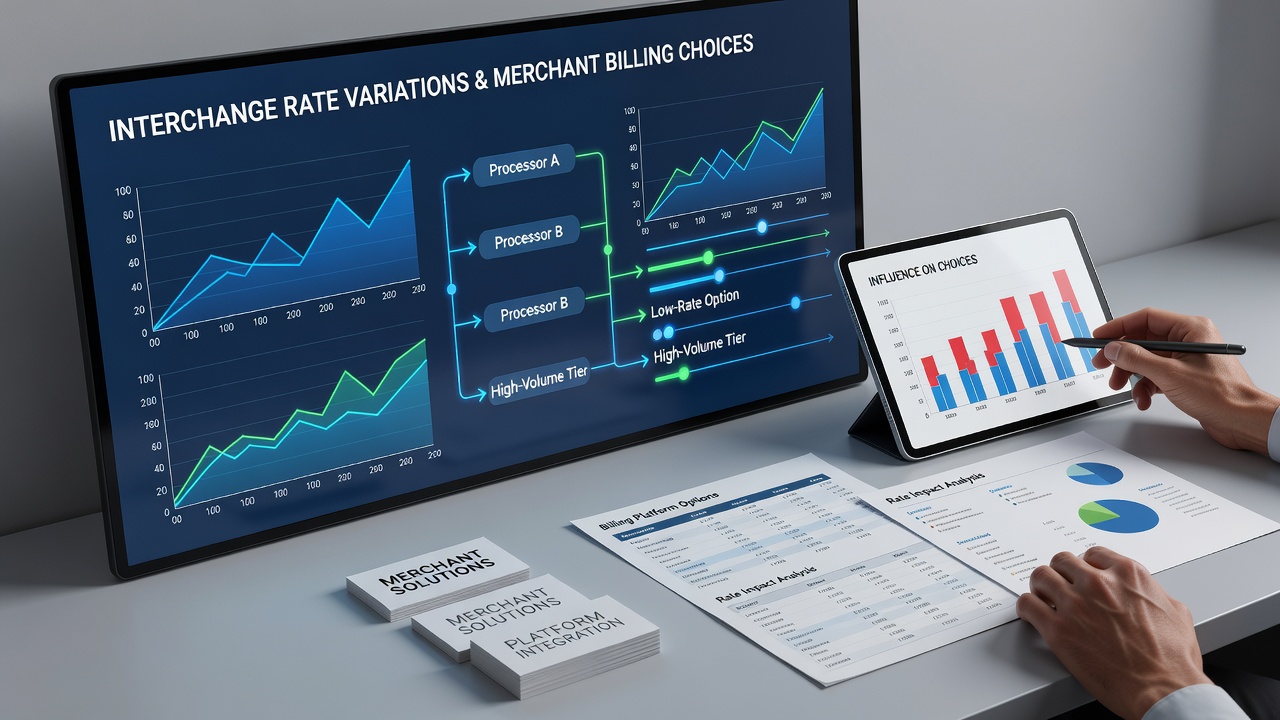
Interchange Rate Variations and Their Influence on Merchant Choices in Billing Platform Integration
Interchange fees represent the costs that merchants incur during card transactions when funds move from the card-issuing bank to the acquiring bank, and these rates shift based on multiple factors including card type, transaction category, merchant volume, and geographic region. Data from payment networks shows that standard credit card interchange often ranges between 1.5 and 3.5 percent plus fixed fees, while debit cards typically carry lower percentages that can dip below 1 percent in high-volume scenarios.
How Rate Structures Differ Across Networks
Visa and Mastercard publish tiered schedules that adjust for premium rewards cards, which carry higher interchange than basic consumer cards, and observers note that these distinctions become especially relevant when merchants integrate recurring billing platforms that process thousands of subscription renewals monthly. The European Central Bank maintains separate caps on interchange for consumer debit and credit transactions within the EU, with maximum rates set at 0.2 percent for debit and 0.3 percent for credit since regulatory changes took effect years ago, whereas the United States relies on market competition and network rules without statutory caps in most segments.
Merchants evaluating billing platforms examine these variations because platforms connect directly to acquirers and gateways that apply the published rates at settlement, and companies processing cross-border subscriptions often face blended rates that incorporate currency conversion fees on top of base interchange. Research indicates that small-ticket transactions under ten dollars sometimes qualify for reduced rates under simplified pricing tiers, which influences how subscription services structure their billing cycles to minimize per-transaction costs.
Merchant Selection Criteria for Integrated Platforms
When organizations compare billing solutions, they review how each platform routes transactions to optimize for lower interchange categories through proper coding of merchant category codes and transaction descriptors, and those who manage high volumes of recurring payments frequently select platforms that support level-two and level-three data enhancements capable of qualifying corporate cards for reduced rates. Figures from industry reports reveal that merchants can lower effective costs by 0.5 to 1 percentage point when they route transactions through platforms that automatically apply the correct interchange qualifiers during authorization.
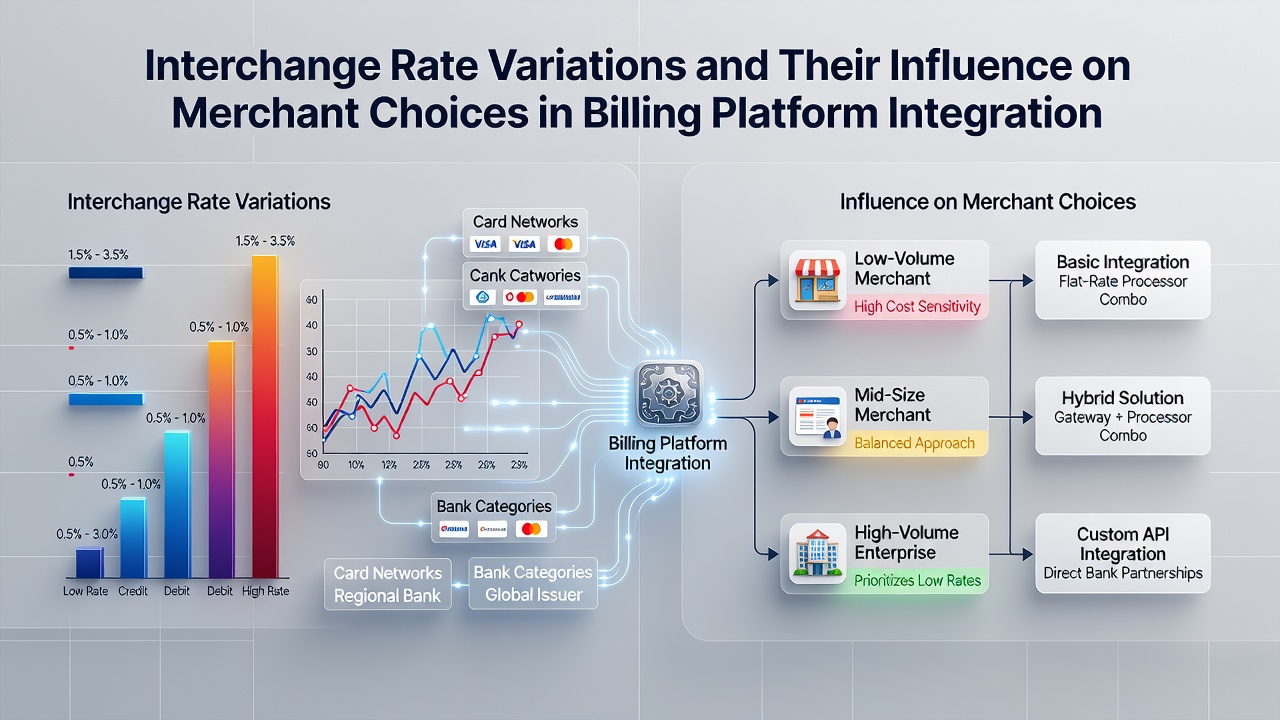
Platform integration decisions also weigh reporting capabilities that break down interchange costs by card brand and type, allowing finance teams to identify patterns where premium cards drive disproportionate fees. In August 2026, several acquiring banks introduced enhanced dashboards that flag transactions approaching higher interchange thresholds in real time, giving merchants the ability to adjust billing prompts before authorization requests reach the network.
Integration Technical Factors and Cost Implications
Billing platforms must interface with payment gateways and processors that settle funds according to network timelines, and interchange variations affect cash flow projections when platforms batch transactions on different schedules. Experts have observed that merchants running hybrid models combining one-time purchases with recurring subscriptions choose platforms offering dynamic routing rules that steer eligible transactions toward acquirers offering volume-based discounts on interchange.
Those managing international billing often integrate platforms that support local acquiring in multiple regions to capture domestic interchange rates instead of cross-border premiums, which can add 1 percent or more to total costs. According to data compiled by the Reserve Bank of Australia, domestic routing in certain markets reduced average interchange by up to 0.8 percentage points compared with offshore processing during the 2025 fiscal year.
Regulatory and Network Updates Affecting Choices
Network rule changes scheduled for late 2026 include adjustments to interchange qualification criteria for contactless and tokenized transactions, and merchants integrating new billing platforms now request documentation confirming compatibility with these upcoming standards. Government sources in Canada have published guidance on interchange transparency that requires acquirers to itemize fees separately from processor charges, giving businesses clearer visibility when evaluating total cost of ownership across platforms.
Companies that process large volumes of digital goods subscriptions examine how platforms handle interchange on stored credentials, because repeat transactions using saved card details sometimes qualify for different rate tiers than initial authorizations. Observers note that platforms providing detailed interchange optimization modules allow merchants to test transaction flows in sandbox environments before committing to production integrations.
Conclusion
Interchange rate variations continue to shape merchant decisions around billing platform selection because they directly influence operating margins and settlement predictability across different transaction types. Organizations that map their card mix and volume patterns against published network schedules gain clearer insight into which platforms deliver measurable savings through proper routing and data handling. As regulatory environments evolve and networks refine their pricing tiers, integration choices made in 2026 will determine long-term cost structures for recurring revenue operations.