Retailers Map Authorization Timestamps From Card Networks to Automated Invoice Adjustments in Hybrid Commerce Setups
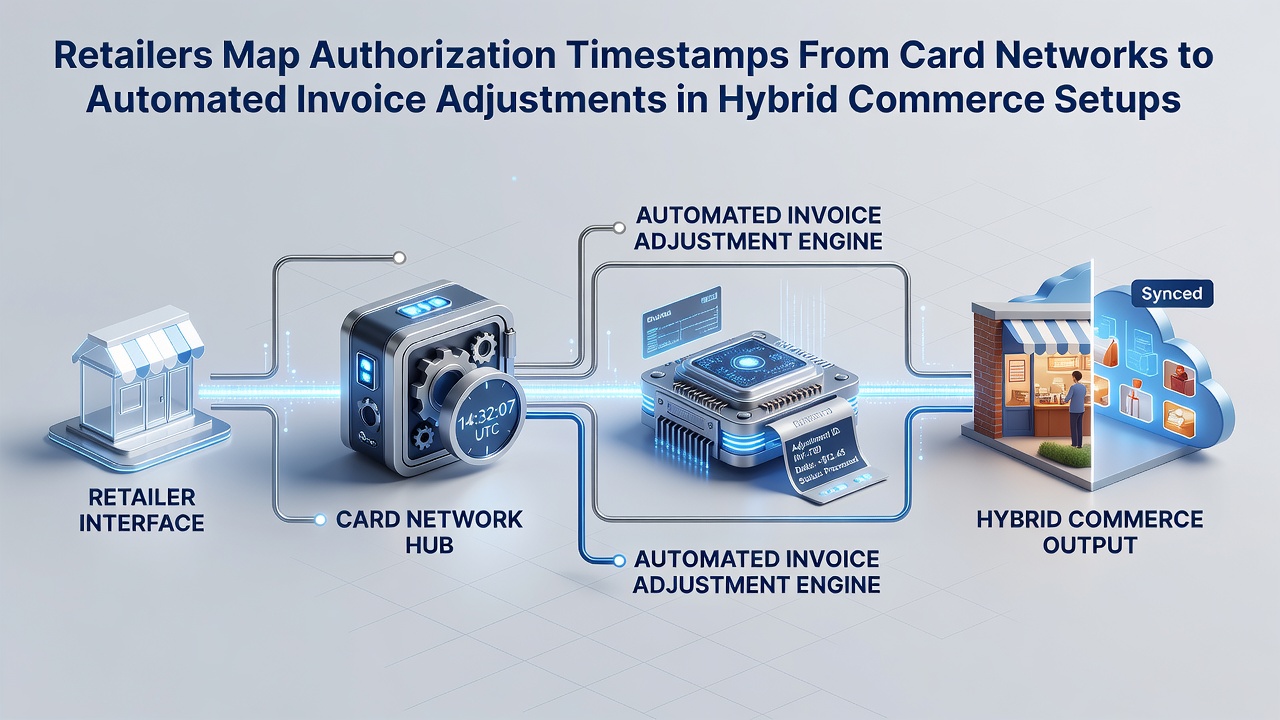
Retailers operating across physical stores and digital channels have developed systems that pull authorization timestamps directly from card networks and feed them into automated invoice adjustment processes, and this mapping supports real-time reconciliation between completed sales and billing records. Card networks generate these timestamps at the moment an authorization request receives approval, creating a precise record that includes the exact second of the transaction event, while hybrid commerce setups combine point-of-sale terminals with online order management platforms that require synchronized data to avoid discrepancies in customer invoices.
Timestamp Capture from Card Networks
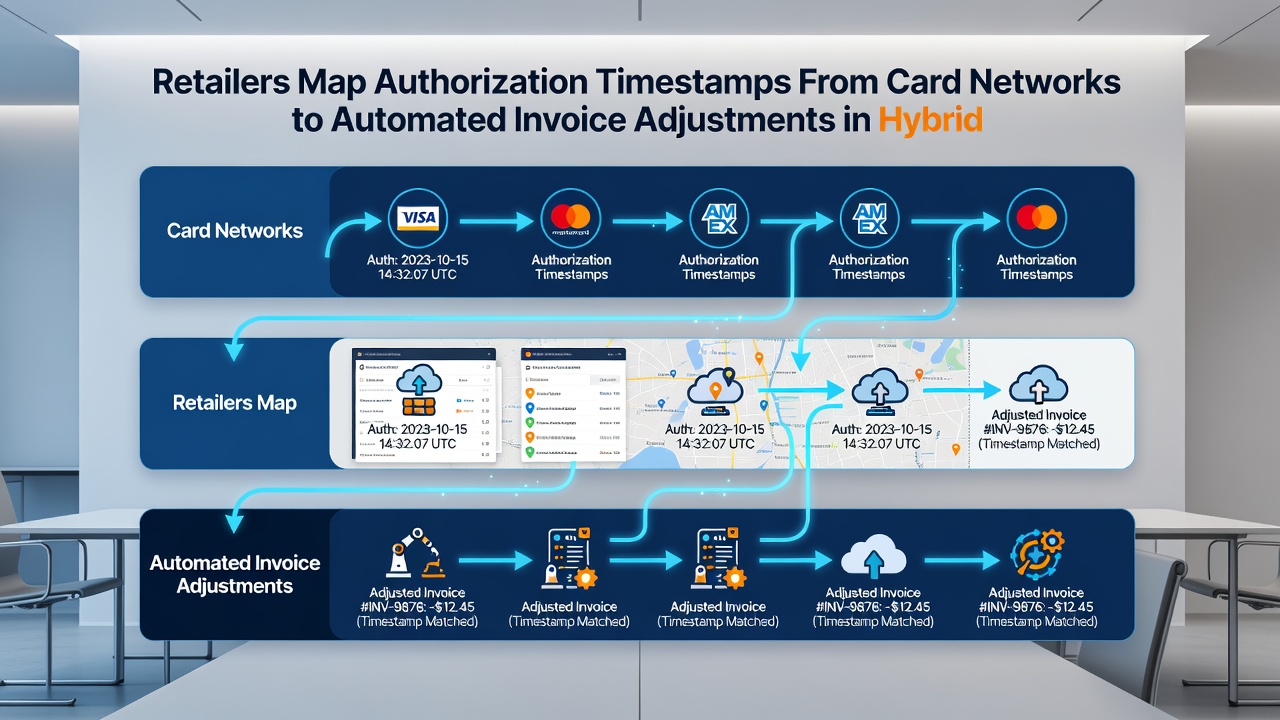
Authorization timestamps originate at the network level when issuers respond to merchant requests, and these markers travel through acquiring banks before reaching retailer systems where software logs the values for later use. Data from payment processors shows that networks such as those operated by major card brands embed these timestamps in standardized message fields that comply with ISO 8583 protocols, allowing downstream applications to extract the information without manual intervention. Retailers then route the captured timestamps into centralized databases that connect physical and online transaction streams, and this integration reduces the lag between sale completion and invoice generation in environments where customers purchase items in-store yet receive digital receipts or adjustments for returns processed through web portals.
Integration in Hybrid Commerce Workflows
Hybrid setups demand that timestamps align sales from countertop readers with orders placed through mobile apps or websites, and mapping occurs when middleware solutions convert network data into formats compatible with enterprise resource planning tools. Observers note that retailers achieve this by establishing direct application programming interfaces between card network gateways and invoice engines, which automatically flag any time-based variances such as authorizations that occur near midnight and affect daily closing reports. In July 2026 updates to settlement reporting standards from the European Central Bank highlighted improved timestamp granularity in cross-border transactions, enabling more precise matching for retailers handling both domestic point-of-sale activity and international e-commerce flows.
Automated Invoice Adjustment Mechanisms
Once timestamps reach the invoice layer, automated rules compare the authorization time against order fulfillment records, and adjustments follow when differences appear between expected and actual billing dates. Systems apply these corrections by recalculating line items or applying credits, and the process relies on predefined logic that references the original network timestamp to determine whether an invoice requires modification for partial shipments or delayed captures. Research from payment industry reports indicates that such automation handles high volumes of hybrid transactions by processing batches during off-peak hours, which keeps invoice accuracy aligned with the precise moments authorizations cleared through the networks.
Take one retailer who implemented timestamp mapping across 200 locations, where the system detected authorization delays averaging 45 seconds between in-store approvals and online order confirmations, and this allowed automatic invoice updates that prevented duplicate charges for customers who completed purchases through multiple channels. The approach connects physical reader outputs directly to cloud-based billing platforms without requiring staff to review each record, and it supports inventory-linked adjustments when timestamps reveal that a sale occurred after warehouse cutoff times.
Data Flow and System Architecture
The architecture begins with card networks transmitting authorization messages that include both the timestamp and unique identifiers, and retailers route this information through secure channels to avoid exposure during transit. Middleware platforms parse the fields, match them against corresponding order numbers from hybrid channels, and trigger invoice engines to generate or revise documents accordingly. According to figures from the Federal Reserve, timestamp precision in authorization messages has increased reporting accuracy for multi-channel merchants by supporting exact correlation between approval events and subsequent financial entries.
Retail chains maintain audit trails that store these mapped timestamps alongside adjusted invoice versions, and this documentation helps meet compliance requirements when regulators examine transaction timing across blended sales models. Systems also incorporate fallback procedures for cases where network timestamps arrive out of sequence due to communication interruptions, and automated reconciliation scripts resolve these by cross-referencing secondary time markers from the acquiring bank layer.
Operational Outcomes Across Retail Networks
Retailers report that timestamp mapping supports faster close-of-day processes because invoice adjustments occur without waiting for manual batch reviews, and this efficiency extends to supply chain signals when adjusted invoices prompt immediate inventory updates. Data shows reduced error rates in billing for hybrid transactions, particularly when sales span time zones and require consistent time references from the original card network authorization. Those who have studied these implementations observe that the method scales effectively for chains managing thousands of daily authorizations, as the automated flow minimizes intervention while preserving the integrity of each transaction's temporal record.
Conclusion
Retailers continue to refine the connections between card network authorization timestamps and automated invoice adjustments, and these efforts produce more accurate billing records in hybrid commerce environments where physical and digital channels operate simultaneously. The mapping process relies on standardized data elements, middleware integration, and rule-based automation that together maintain synchronization across transaction types and fulfillment methods.