Settlement Rhythms from Acquiring Banks Guide Automated Restock Triggers in Subscription Retail Chains

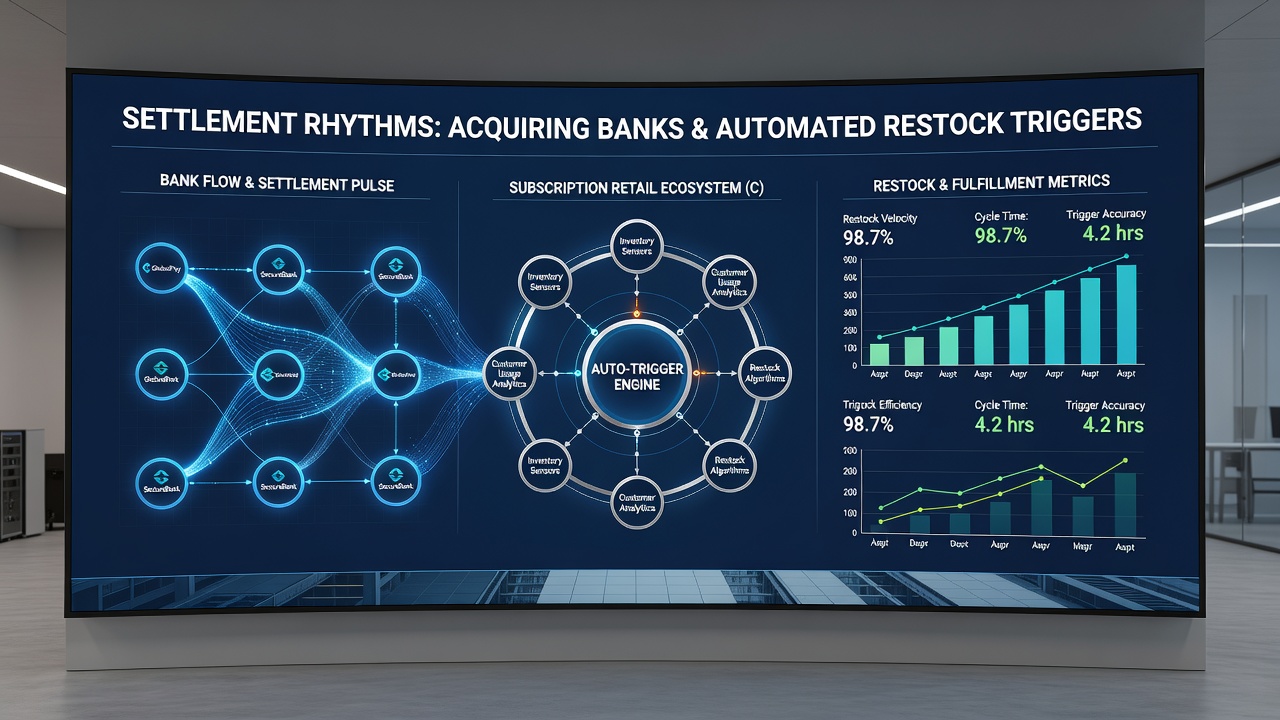
Acquiring banks process batches of card transactions from subscription retail chains and those settlement cycles directly shape when automated systems reorder stock, while payment confirmation timestamps feed into warehouse algorithms that adjust reorder points based on cleared volumes rather than initial authorizations alone.
Understanding Settlement Cycles in Acquiring Bank Operations
Acquiring banks collect transaction data from merchants throughout the day then submit batches to card networks for clearing, and this rhythm typically follows daily or twice-daily schedules depending on the bank's processing agreements with networks such as Visa and Mastercard. Subscription retail chains rely on these cleared amounts because they represent finalized revenue that can trigger inventory decisions without the risk of later chargebacks altering the figures.
Data from the Federal Reserve shows that most U.S. acquirers complete batch submissions between 10 p.m. and midnight Eastern Time, after which funds move through interchange networks and reach merchant accounts within one to three business days. Retail operators use these settlement confirmations to update demand forecasts since the cleared totals provide a reliable signal of actual consumption patterns in recurring delivery models.
Linking Cleared Transactions to Inventory Algorithms
Subscription services such as meal kit providers and grooming product boxes integrate acquiring bank settlement feeds into their enterprise resource planning platforms, and the connection allows restock triggers to activate only after funds clear rather than at the point of authorization. This approach reduces over-ordering because algorithms compare settled batch totals against historical subscription renewal rates before issuing purchase orders to suppliers.
Observers note that when settlement files arrive with reconciled amounts, the data flows through middleware layers that map transaction categories to specific product SKUs, enabling precise adjustments to reorder quantities. In hybrid retail operations that combine in-store pickups with home deliveries, the same settlement rhythms help synchronize physical shelf replenishment with digital subscription forecasts across multiple channels.
Technical Pathways from Bank Batches to Warehouse Signals
Acquiring banks transmit settlement reports in standardized formats such as ISO 8583 or custom flat files, and these reports contain timestamps, merchant identifiers, and net amounts after fees. Subscription platforms parse the files through secure APIs that push the reconciled figures into inventory management modules, where rule-based engines compare daily cleared volumes against minimum stock thresholds.
Canadian payment infrastructure data compiled by Payments Canada indicates that batch processing windows influence how quickly retailers can act on revenue signals, and chains that align their reorder logic with these windows experience tighter synchronization between cash flow and physical goods movement. European Central Bank reports on retail payment systems further highlight that settlement finality reduces uncertainty in automated replenishment decisions across cross-border subscription services operating in multiple currencies.
Case Examples from Subscription Retail Networks
One national beauty subscription service adjusted its warehouse triggers in 2025 after mapping acquiring bank settlement files to product-level consumption data, resulting in a measurable drop in excess inventory held for seasonal box variants. Another meal delivery operator in Australia integrated settlement timestamps from its primary acquirer with supplier lead times, allowing the system to issue restock orders only when cleared batch totals exceeded projected renewal volumes by a set margin.
Retail technology providers have documented similar integrations where settlement rhythms replace raw authorization counts as the primary input for demand planning, and this shift proves especially useful during high-volume renewal periods when authorization spikes may not convert into actual settled revenue at the expected rate.
Future Developments Expected by Mid-2026
Industry participants anticipate that real-time settlement pilots launched by several acquiring banks will shorten the lag between transaction initiation and cleared data availability, and subscription chains are already testing connections that would allow inventory systems to respond within hours instead of waiting for end-of-day batches. As these faster cycles expand, algorithms will incorporate partial settlement confirmations to refine restock timing while still maintaining safeguards against unconfirmed amounts.
Conclusion
Settlement rhythms established by acquiring banks continue to serve as a foundational input for automated restock mechanisms in subscription retail chains, because the cleared data provides a verified basis for matching revenue recognition with physical inventory movement. Retail operators who align their warehouse triggers with these banking cycles maintain tighter control over stock levels while reducing exposure to discrepancies between authorized and finalized transactions.