Streamlining Retail Chaos: When POS Meets Online Payments Head-On
Streamlining Retail Chaos: When POS Meets Online Payments Head-On
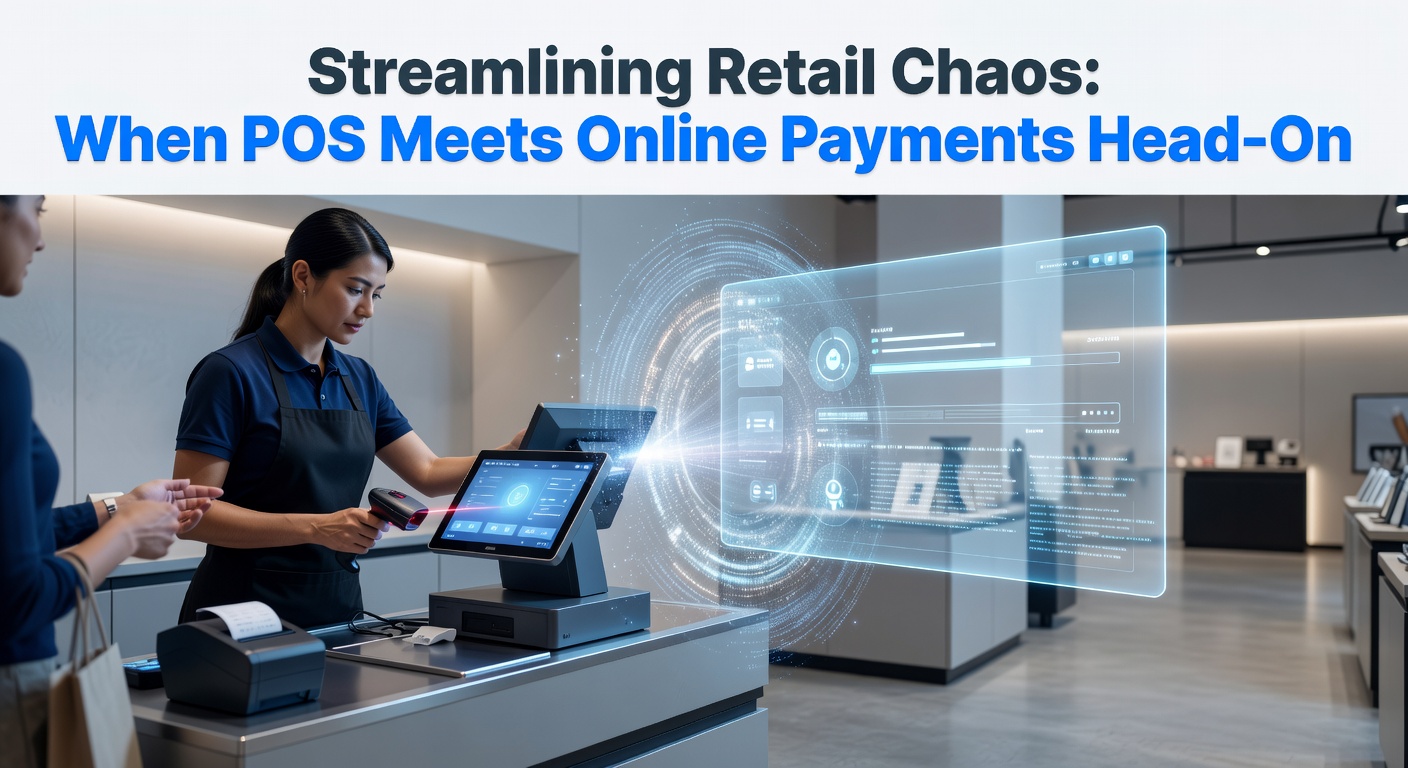
The Retail Battlefield: Lines, Stockouts, and Payment Headaches
Retail floors buzz with urgency during peak hours, where customers juggle carts full of goods while eyeing exit doors clogged by slow checkouts; point-of-sale (POS) systems, once clunky cash registers, now evolve into digital hubs, yet chaos persists because they often operate in silos separate from online payment ecosystems. Data from the National Retail Federation reveals that U.S. retailers lost $112 billion to out-of-stocks in 2023 alone, a figure exacerbated by disconnected in-store and e-commerce inventory tracking, and that's where POS-online integration steps in, syncing real-time data to prevent such mismatches. Turns out, shoppers abandon 70% of online carts before checkout according to industry benchmarks, but when POS terminals accept those same digital wallets or buy-now-pay-later options right at the counter, hesitation drops sharply.
Experts observe how small merchants, squeezed by rising operational costs, turn to unified platforms that bridge physical and virtual worlds; one study from Baymard Institute highlights that seamless payment options cut abandonment rates by 35%, proving the payoff when POS meets online head-on. And here's the thing: during holiday rushes, stores without this fusion see lines stretch 15 minutes or more, driving customers to competitors' apps for quicker buys.
Evolution of POS: From Cash Drawers to Digital Command Centers
POS systems trace roots to 1879 when the National Cash Register Company introduced mechanical registers to curb employee theft, but fast-forward to today, and cloud-based terminals process contactless taps in under two seconds; retailers like those in fast fashion or grocery chains deploy these upgraded systems, which now pull from online payment gateways via APIs, ensuring a customer's Apple Pay used online works flawlessly in-store. Research indicates that 68% of global retailers adopted omnichannel strategies by 2024, per Statista figures, blending POS hardware with software that handles everything from EMV chips to cryptocurrency trials.
What's interesting is how mobile POS units, wielded by staff weaving through aisles, eliminate fixed-line bottlenecks; take one case where a mid-sized chain integrated Stripe's API into existing hardware, slashing transaction times by 40% while capturing online loyalty data at physical registers. Yet challenges linger, since legacy systems from the early 2000s resist upgrades, leaving merchants vulnerable to downtime during high-traffic events.
Online Payments Crash the In-Store Party: The Omnichannel Imperative
Digital wallets like Google Pay and Klarna exploded post-pandemic, with transaction volumes hitting $8 trillion worldwide in 2024 according to Juniper Research, pressuring brick-and-mortar stores to adapt or risk obsolescence; integration happens when POS software embeds these options, allowing a shopper to tap a phone for seamless checkout whether browsing shelves or websites. Observers note that omnichannel retailers outperform single-channel ones by 30% in revenue growth, as reported in McKinsey analyses, because unified payments provide a consistent experience across touchpoints.
But here's where it gets interesting: real-time synchronization prevents over-selling, where an online order depletes stock visible on POS screens instantly; grocery chains, for instance, use this to fulfill click-and-collect orders without manual checks, reducing errors by 25% based on pilot programs from major players.
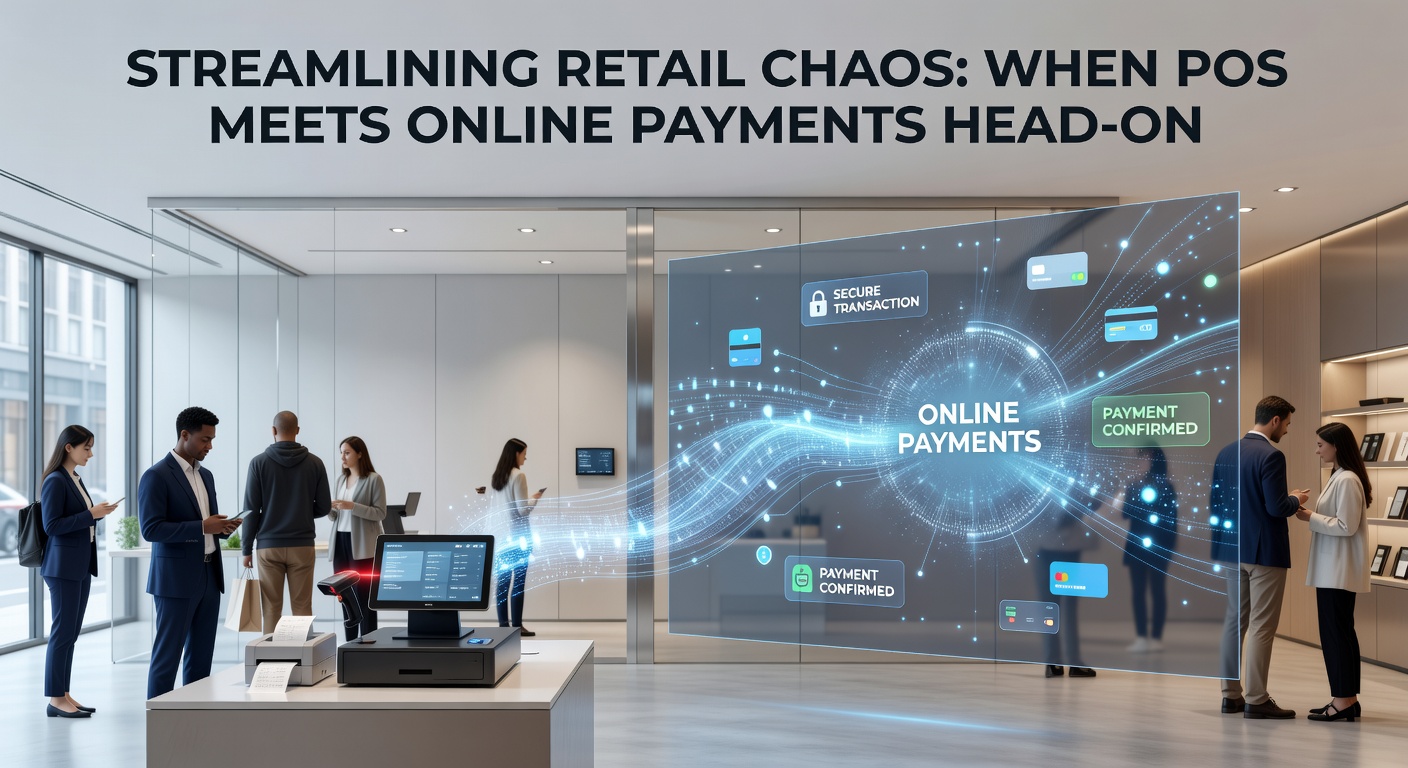
Tech Under the Hood: APIs, Cloud Sync, and Security Layers
Application programming interfaces (APIs) form the backbone, linking POS fronts to back-end online processors like Adyen or Worldpay, while cloud servers handle the heavy lifting of tokenization to secure card data; figures from the European Central Bank show that instant payment schemes across Europe processed over 1 billion transactions in 2024, many funneled through hybrid POS setups. Developers craft these connections with protocols like ISO 20022, ensuring compatibility from U.S. chains to Australian independents.
Security ramps up too, with PCI DSS Level 1 compliance mandatory, and biometric scans adding layers against fraud; one retailer reported a 50% fraud drop after rolling out token-based online-to-POS flows. So, while setup demands initial investment—averaging $5,000 per terminal per Gartner estimates—the ROI materializes in weeks through faster throughput.
Real-World Wins: Case Studies from the Trenches
Consider a boutique clothing chain in Canada that fused Shopify POS with its e-commerce site; sales jumped 22% in the first quarter post-integration, as customers used saved online preferences at registers, per their internal metrics shared at industry forums. Down under, Australian supermarkets linked Afterpay into POS lanes, boosting average basket sizes by 15% since impulse buys flowed uninterrupted from app to counter.
And in Europe, a hypermarket group synchronized inventory via SAP's cloud POS, cutting stock discrepancies from 8% to under 2%, data that echoes findings from similar deployments. These examples show how the rubber meets the road: practical fusion yields tangible gains without overhauling entire infrastructures.
Challenges on the Horizon: Integration Hiccups and Regulatory Shifts
Legacy hardware poses the biggest hurdle, often requiring middleware adapters that add latency; smaller retailers balk at costs, with 40% citing budget as a barrier in Deloitte surveys, although modular upgrades now allow piecemeal transitions. Data privacy regs like GDPR in teh EU or CCPA in California demand vigilant handling of cross-channel customer info, prompting POS providers to bake in consent tools.
Looking ahead, April 2026 marks a pivot as the EU's PSD3 framework rolls out phased updates, mandating faster cross-border payments integrable into POS networks, per regulatory timelines; U.S. merchants gear up similarly for FedNow expansions, ensuring online methods like ACH credits hit store tills in seconds. Cyber threats loom large too, but blockchain pilots in select chains offer tamper-proof ledgers for transaction verification.
Quantifying the Streamline: Metrics That Matter
Numbers don't lie: integrated systems boost checkout speeds by 28%, per Forrester research, while customer satisfaction scores climb 20 points on average; inventory accuracy hits 98% in optimized setups, freeing staff for upselling rather than stock chases. Returns processing simplifies too, as online purchase data pops up on POS screens for instant refunds, trimming handling time by half.
Yet scalability tests true during spikes—Black Friday saw one integrated network handle 5x volume without crashes, unlike siloed rivals that buckled under load.
Future-Proofing Retail: AI and Beyond
Artificial intelligence enters the fray, predicting stock needs from POS-online patterns and suggesting personalized payment nudges; voice-activated checkouts, trialed in pilot stores, cut interactions further. Analysts project that by 2028, 85% of transactions will be digital-first across channels, driven by these convergences.
What's significant is the shift toward open banking APIs, letting POS pull from diverse accounts effortlessly; early adopters in Asia-Pacific report 18% revenue lifts, setting the pace globally.
Conclusion
When POS terminals embrace online payments, retail chaos bows to efficiency, transforming jammed aisles into fluid experiences backed by synced data flows and robust tech; merchants who invest here capture loyalty in an omnichannel era, where seamless transitions keep customers returning, transaction after transaction. Data underscores the transformation—reduced losses, amplified sales, fortified security—and as 2026 approaches with fresh regs and innovations, the integration wave gains unstoppable momentum, reshaping retail one tap at a time.