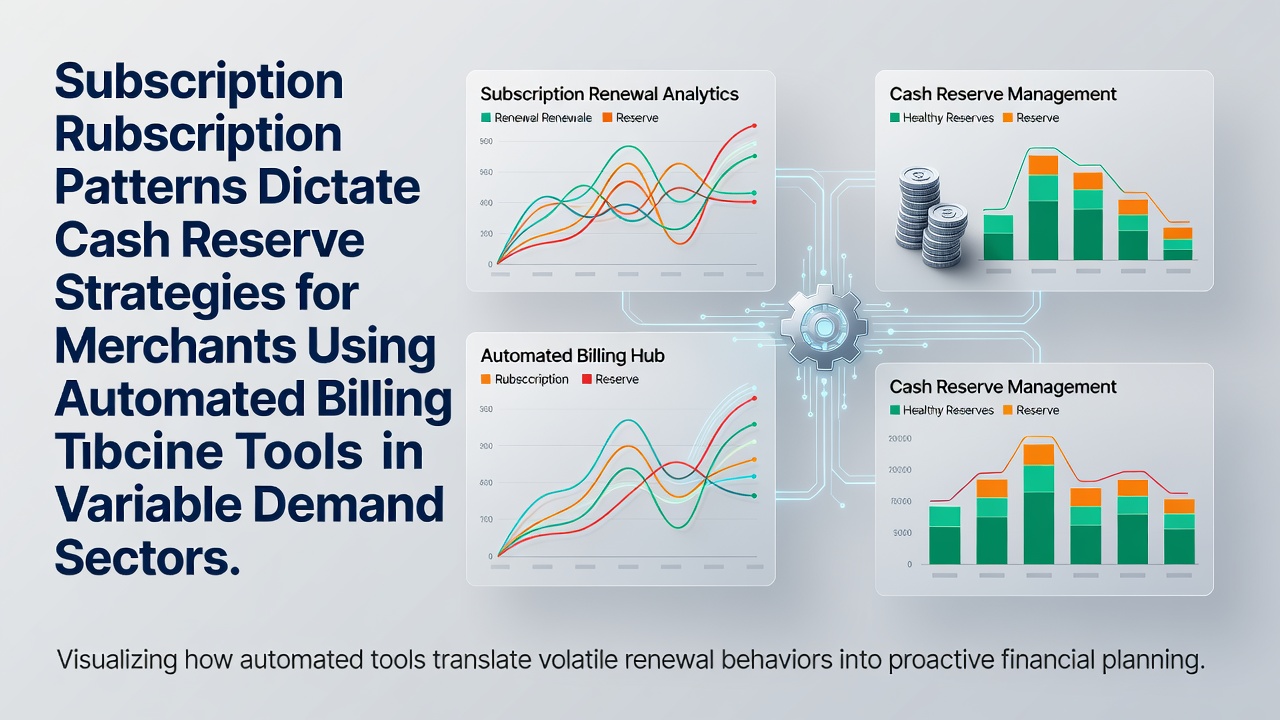
Subscription Renewal Patterns Drive Cash Reserve Adjustments for Automated Billing in Variable Demand Markets
Merchants operating in sectors with variable demand rely on subscription renewal patterns to shape their cash reserve strategies when they deploy automated billing tools, and these patterns emerge from transaction histories that fluctuate with seasonal shifts, economic cycles, and consumer behavior changes. Data collected through billing platforms shows renewal rates often spike or drop in predictable windows, prompting businesses to recalibrate reserve levels ahead of those periods rather than reacting after shortfalls appear.
Tracking Renewal Cycles Across Fluctuating Sectors
Renewal data streams feed directly into forecasting models that merchants use to project incoming revenue from recurring charges, while variable demand sectors such as outdoor equipment retail or seasonal apparel experience peaks tied to weather patterns or holidays. Observers note that renewal clusters tend to align with these external drivers, so companies examine historical datasets spanning multiple years to identify consistent intervals where churn rises or stabilizes. One analysis of transaction logs from automated systems revealed that certain industries record 15 to 20 percent renewal drops during off-peak months, which directly influences how much liquidity they set aside to cover operating costs until the next cycle begins.
Automated billing tools capture granular details including payment success rates, retry attempts, and customer retention signals that feed into reserve calculations, and merchants integrate this information with broader market indicators. Researchers discovered that businesses monitoring these metrics weekly rather than monthly maintained steadier cash positions during demand swings, because the tools flag impending shortfalls early enough for adjustments. In July 2026, several platforms updated their analytics modules to incorporate real-time economic data feeds, allowing users to overlay renewal trends with inflation or employment figures from government sources.
Building Reserves Based on Pattern Insights
Cash reserve strategies shift when merchants map renewal patterns onto expected outflows, since automated billing creates steady inflows that can mask underlying volatility in variable demand environments. Those who studied these linkages found that setting aside reserves equivalent to 45 to 60 days of operating expenses during high-renewal periods provided buffers when subsequent cycles showed declines. Figures from industry reports indicate that companies in retail and service sectors using such calibrated reserves reduced their reliance on short-term credit lines by noticeable margins compared with peers who maintained flat reserve targets year-round.
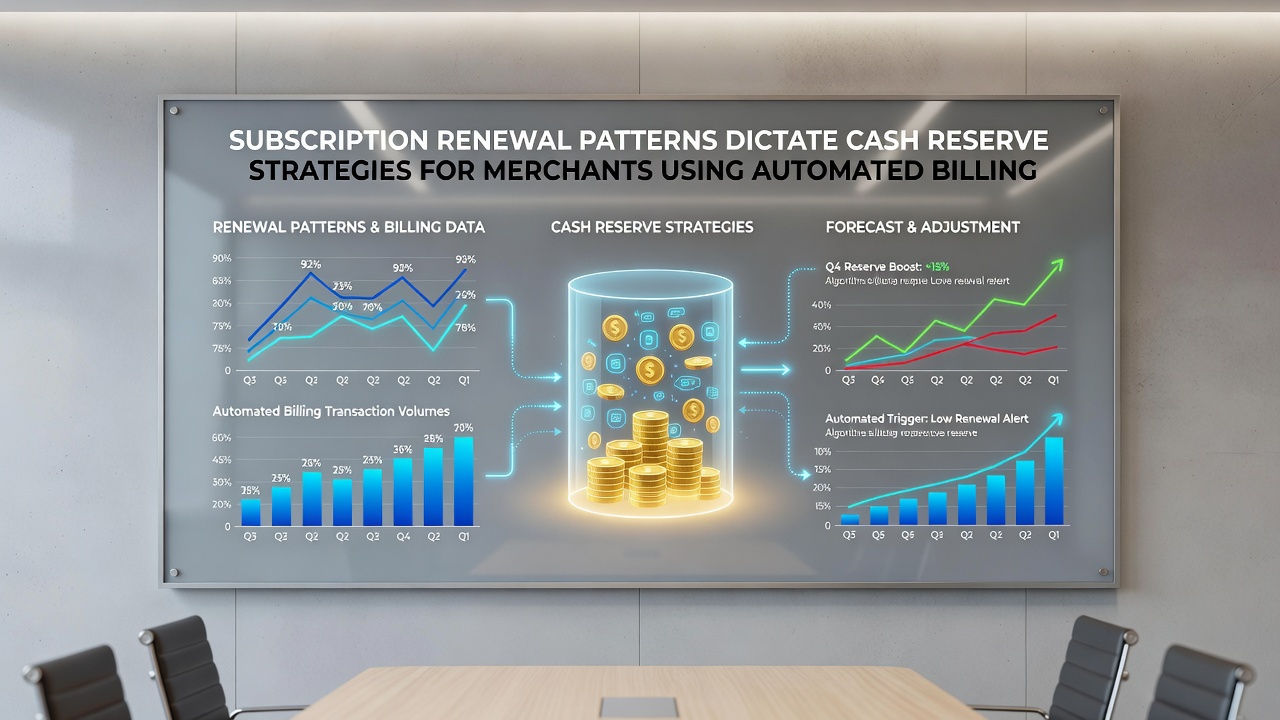
Merchants also factor in failed payment recovery rates when determining reserve amounts, because automated retry sequences recover a portion of declined transactions yet leave gaps that affect available funds. Data shows recovery success varies by sector, with some seeing 70 percent of failed charges resolved within the first three attempts while others hover near 50 percent. This variation leads businesses to maintain differentiated reserve pools, one calibrated for expected renewals and another earmarked for recovery shortfalls during low-demand stretches. According to statistics released by the Federal Reserve, overall revolving credit utilization rose modestly in early 2026, underscoring the value of pattern-driven reserve planning for merchants who process recurring payments.
Integration of Billing Tools with Financial Planning
Automated billing platforms now connect directly with accounting software, enabling merchants to run scenario simulations that test reserve levels against multiple renewal outcomes. These integrations pull live data on subscription counts, average revenue per user, and churn velocity, then project cash positions weeks or months ahead. Experts have observed that such connected systems help identify when reserves need augmentation before demand dips materialize, rather than after inventory or payroll pressures emerge. A European Central Bank review of payment ecosystems highlighted similar synchronization benefits across cross-border merchants facing variable regional demand.
Variable demand sectors further complicate planning when external events such as supply chain disruptions alter customer purchasing power, yet renewal pattern analysis provides an internal anchor. Merchants combine billing tool outputs with supplier lead times to time reserve draws, ensuring funds remain available for restocking during recovery phases. One case involved a mid-sized retailer that adjusted its reserve policy after reviewing two years of renewal data, resulting in smoother operations across peak and trough periods without increasing overall capital commitments.
Conclusion
Subscription renewal patterns supply the factual foundation for cash reserve decisions among merchants who depend on automated billing in variable demand sectors, and the ongoing refinement of these strategies rests on continuous data integration rather than static rules. As billing tools evolve to incorporate wider economic signals, the connection between renewal cycles and reserve management continues to tighten across affected industries.