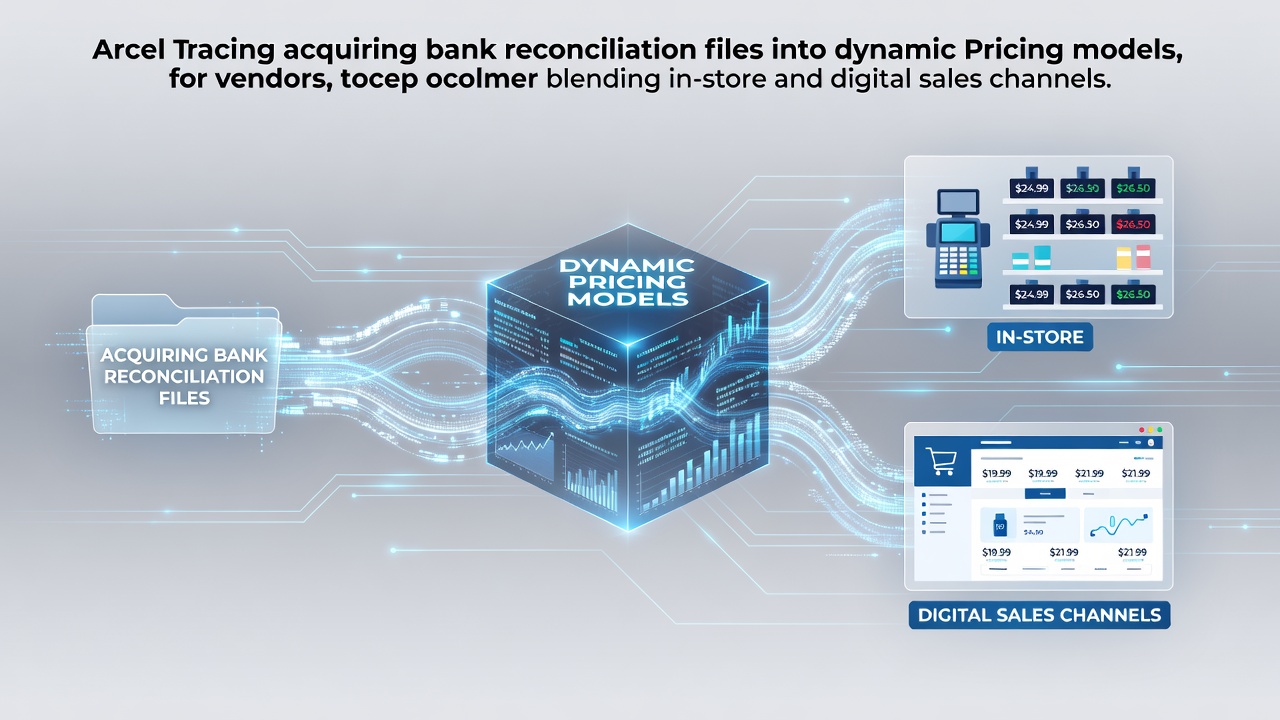
Tracing Acquiring Bank Reconciliation Files into Dynamic Pricing Models for Vendors Blending In-Store and Digital Sales Channels
Vendors operating across physical stores and digital platforms pull transaction settlement data from acquiring banks to inform price adjustments that respond to real-time sales patterns and cost structures, and reconciliation files serve as the primary source for matching authorized payments with settled amounts while highlighting variances in fees and chargebacks. These files arrive in standardized formats such as ISO 20022 or proprietary batch reports that contain timestamps, merchant identifiers, channel indicators, and net settlement values, allowing systems to separate in-store terminal batches from online gateway submissions without manual intervention.
Data Pathways from Acquiring Banks to Pricing Engines
Reconciliation processes begin when acquiring banks compile daily or intraday files that aggregate authorizations from card networks, and vendors map these records into centralized data lakes where algorithms compare expected revenue against actual deposits while factoring in interchange rates that differ between card-present and card-not-present transactions. Once loaded, the information flows into pricing models that recalculate optimal price points based on velocity metrics, margin targets, and inventory levels across both channels, and integration occurs through APIs that push reconciled figures into rule engines every few hours rather than at end-of-day cutoffs. Observers note that this timing matters because digital sales often spike outside traditional banking hours while in-store volumes follow predictable daily rhythms, creating opportunities for synchronized adjustments.
Channel-Specific Considerations in Blended Operations
Physical terminals generate batch files that include device identifiers and location codes, whereas digital platforms contribute gateway logs tagged with session data and promotional codes, and reconciliation systems must normalize these inputs before feeding unified datasets into pricing logic. When discrepancies appear, such as delayed settlements from high-volume online orders or terminal downtime events, the models apply weighted averages that prevent abrupt price swings in either channel. Research from the Federal Reserve shows that cross-channel vendors who align reconciliation timing with pricing cycles report tighter control over promotional spend and reduced instances of negative margins during peak periods.

Take one mid-sized apparel chain that routes reconciled files through middleware before they reach the pricing platform, and the system then adjusts online listings within two hours of settlement confirmation while updating in-store electronic shelf labels overnight. This approach keeps prices aligned with actual cash flow rather than projected authorizations, and it accounts for regional fee variations that acquiring banks apply differently to domestic versus international cards processed through each channel.
Technical Integration Steps and August 2026 Developments
Implementation typically follows a sequence of extraction, validation, enrichment, and model ingestion, where validation checks for duplicate entries or mismatched merchant IDs before enrichment adds contextual fields such as current inventory counts pulled from warehouse systems. By August 2026 several acquiring banks are rolling out enhanced file attributes that embed channel-specific cost breakdowns directly in the settlement records, and this change reduces the preprocessing steps required before data enters pricing engines. European Central Bank documentation on retail payment statistics indicates that standardized fields for blended merchants improve matching accuracy between authorization and settlement stages, which in turn supports more granular dynamic pricing rules that differentiate between in-store pickup orders and pure digital fulfillment.
Those who manage these systems often discover that legacy point-of-sale software requires additional mapping layers to interpret new reconciliation fields, yet once configured the combined dataset enables pricing engines to respond to margin compression caused by sudden spikes in digital returns or in-store theft adjustments reported in the same files. The process relies on event-driven architecture rather than scheduled batch jobs, allowing price updates to trigger immediately after reconciliation completes instead of waiting for nightly cycles.
Practical Outcomes Across Retail Segments
Grocery operators use reconciled data to recalibrate produce pricing when digital orders show higher waste rates than in-store equivalents, while electronics vendors apply the same files to shift bundle discounts when settlement volumes reveal slower movement through one channel. In each case the reconciliation file acts as the single source of truth that prevents pricing models from operating on unverified authorization counts alone. Industry reports compiled by trade associations across North America and the Asia-Pacific region confirm that vendors adopting these linkages achieve measurable reductions in manual pricing overrides during high-volume periods such as seasonal promotions.
Conclusion
Tracing acquiring bank reconciliation files into dynamic pricing models gives blended-channel vendors a direct line from settlement reality to price execution, and continued standardization efforts through 2026 are expected to shorten the interval between transaction completion and model response. The approach depends on accurate file mapping, timely API delivery, and careful handling of channel-specific cost structures, yet the underlying data flow remains consistent across retail categories.