When Storefront Machines Talk to Online Processors: Tracing Unified Commerce Pathways
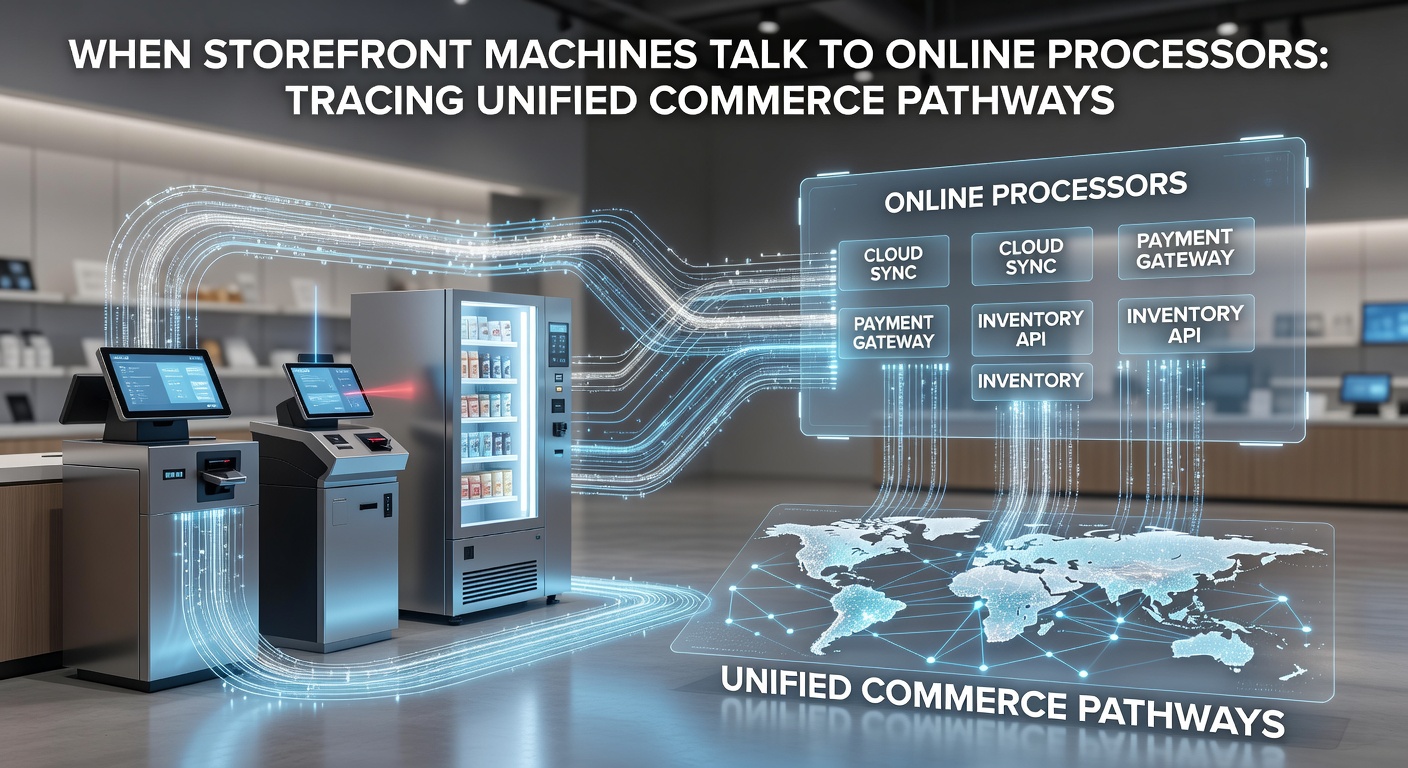
Storefront machines, including point-of-sale terminals and handheld devices, exchange transaction data with online processors through structured communication layers that support unified commerce operations. These pathways handle payment authorization, inventory updates, and customer profile synchronization in real time, allowing retailers to maintain consistent records across physical and digital channels. Data moves from the terminal's local software stack through secure network protocols before reaching centralized processors hosted in cloud environments.
Core Elements of Terminal-to-Processor Communication
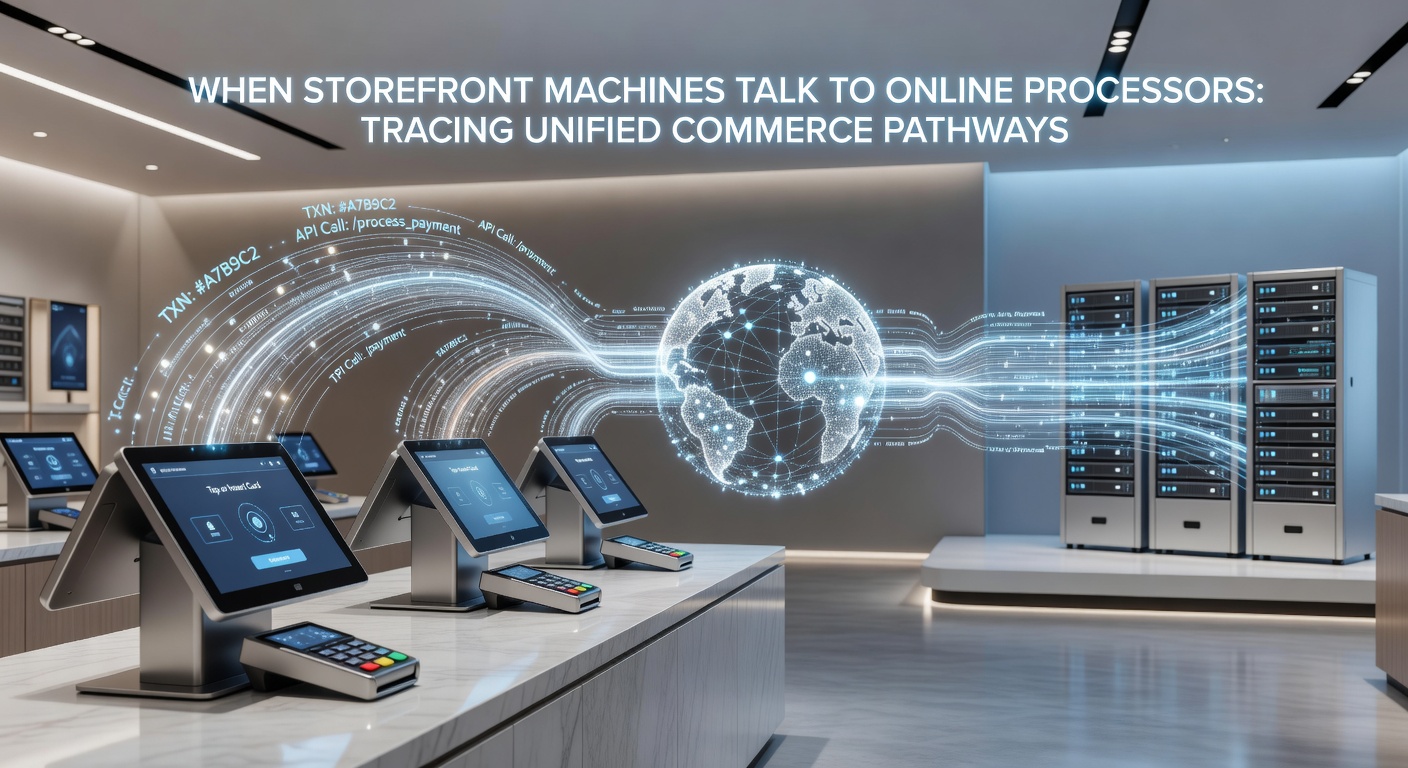
Terminals initiate contact by formatting transaction details according to established message standards such as ISO 8583, which structures fields for card data, amounts, and merchant identifiers. The message travels over encrypted channels using TLS protocols before arriving at the processor's gateway, where validation occurs against issuer databases. Processors return approval codes along the same route, completing the loop within seconds under normal network conditions. Unified commerce platforms extend this basic exchange by embedding additional metadata, such as stock level adjustments, that travel alongside payment instructions.
Observers note that integration points often rely on application programming interfaces developed by payment service providers, enabling terminals to push and pull information without custom middleware in many cases. These APIs standardize requests for recurring elements like loyalty balances or promotional eligibility, reducing duplication across systems. In May 2026, several major providers expanded their API documentation to include fields for real-time omnichannel order routing, reflecting broader adoption of these extended pathways.
Tracing Data Movement Through Multiple Layers
Information originates at the terminal's input layer, where card readers capture details and the device software packages them for transmission. From there the data packet crosses the retailer's local network, often via Ethernet or cellular connections, and enters the processor's perimeter through firewall rules that inspect packet headers. Inside the processor environment, the message undergoes tokenization to replace sensitive card numbers with surrogate values before further routing to acquiring banks and card networks. Return paths mirror this sequence, carrying status updates that trigger terminal displays and backend record updates simultaneously.
Research from the Bank for International Settlements indicates that average end-to-end latency for these exchanges has decreased as edge computing nodes handle preliminary checks closer to the terminal location. Bank for International Settlements reports on payment system performance show measurable improvements in cross-channel consistency when processors apply unified data schemas. Additional hops may occur when fraud scoring engines or tax calculation services receive copies of the transaction stream, each adding specific validation steps without altering the primary authorization flow.
Security Protocols Governing the Pathways
Encryption standards protect cardholder data at rest and in transit, with processors maintaining compliance under frameworks such as PCI DSS. Terminals generate unique session keys for each transaction batch, while processors enforce end-to-end encryption that prevents intermediate systems from accessing full card details. Token services replace primary account numbers early in the journey, limiting exposure if network segments become compromised. Audit logs capture each transfer point, allowing administrators to reconstruct message routes during investigations.
European Central Bank guidelines on retail payment security emphasize segmentation of networks that carry terminal traffic from those used for general business operations. European Central Bank analyses document how separation reduces the attack surface while preserving the speed required for unified commerce transactions. Processors implement continuous monitoring that flags deviations in message volume or timing patterns, triggering automated reviews before data reaches settlement stages.
Integration Patterns Observed Across Retail Environments
Retail chains deploy middleware layers that normalize outputs from diverse terminal models before forwarding them to a single processor instance. This normalization handles variations in hardware firmware and regional message formats, ensuring downstream systems receive uniform data structures. Cloud-based processors expose configuration dashboards that let merchants map terminal events to online order workflows, such as linking an in-store return to an e-commerce refund queue. Synchronization occurs through scheduled jobs or event-driven triggers, depending on the volume and urgency of updates required.
Those who have examined deployment records report that successful implementations maintain separate queues for high-priority payment messages and lower-priority inventory syncs, preventing delays in authorization when secondary data flows increase. Processors often provide sandbox environments where retailers test pathway configurations against simulated network conditions before live rollout. These testing routines replicate latency spikes and partial message failures, confirming that fallback mechanisms restore full functionality without manual intervention.
Conclusion
Pathways between storefront machines and online processors continue to evolve through standardized messaging, layered encryption, and API-driven integrations that support unified commerce requirements. Data traverses defined stages from terminal capture through processor validation and return, with each segment governed by compliance rules and performance metrics. Retail operations rely on these traceable routes to keep records aligned across channels, and ongoing refinements in message handling sustain the reliability of the overall system.